Foundation Repair in Joshua, TX
Half the ground here barely moves. The other half swells and shrinks. A house can sit on both.
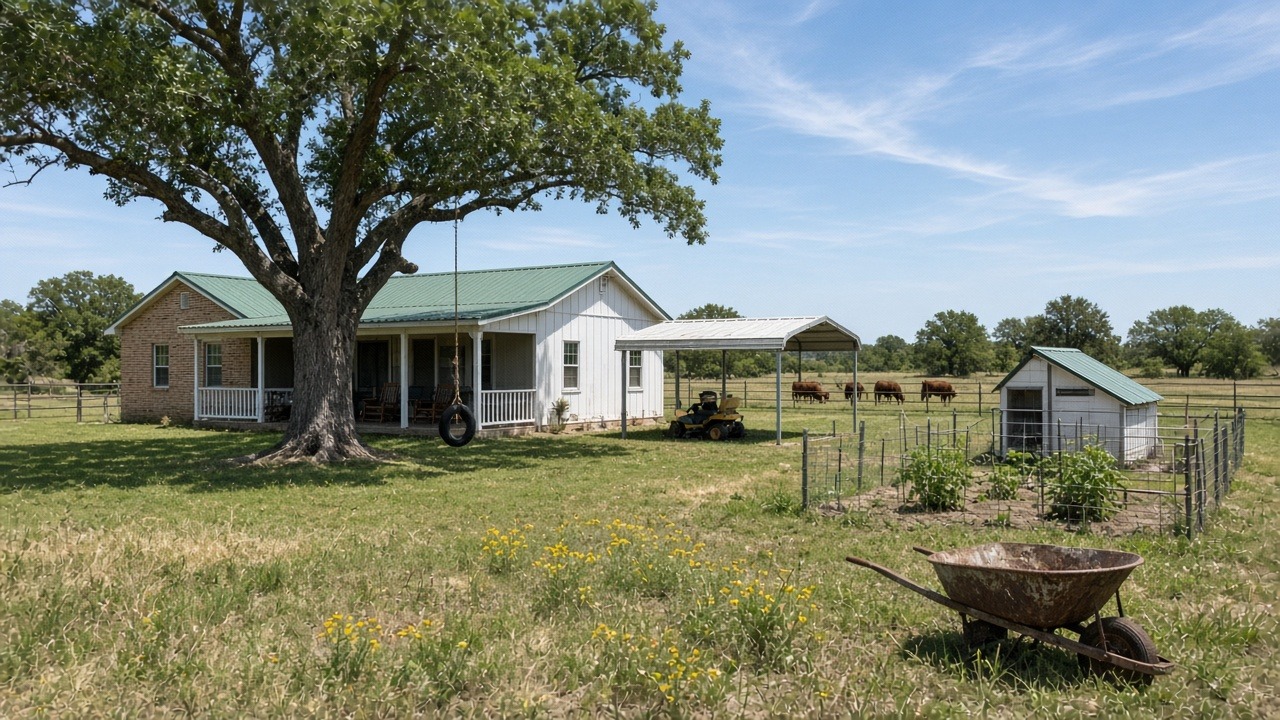
Sandy, non-expansive (Gasil ~19%)
Expansive clay (Crosstell ~36%)
Foundation Repair in Joshua, TX is shaped by a soil map that changes under your feet: sandy, stable ground in one spot and expansive clay a short distance away. That mix is what makes a Joshua slab behave differently from a Crowley or Burleson slab, because the house can rest on two kinds of soil at once.
Why Does Soil Make Joshua Different?
In USDA data, Crosstell, an expansive clay under sandy loam, covers about 36% of Joshua's mapped land, and Gasil, a non-expansive sandy soil, about 19%. Rader and Silstid each cover about 13%, with Birome and Hassee about 3% each. About 46% of mapped land carries a shrink-swell limitation.
The Crosstell under Joshua is the same Cross Timbers clay series that runs through Burleson: a very plastic subsoil under a sandy loam top, formed in Woodbine Formation claystone. Gasil, by contrast, is a sandy soil that barely changes with moisture. So a single Joshua lot can have stable sand on one side and moving clay on the other.
What's mapped under Joshua
Share of Joshua's mapped land by soil series, summarized from USDA SSURGO data.
Why Do Mixed Soils Crack Joshua Foundations Unevenly?
When part of a slab sits on soil that swells and shrinks and part sits on soil that barely moves, the house doesn't move as one piece. Stress concentrates where the two soils meet, so diagonal cracks and a single sinking corner are common complaints on mixed-soil Joshua lots.
A slab is a rigid plate. If the clay side drops in a dry summer while the sandy side holds steady, the slab tilts and bends across the boundary. That is why one corner of a Joshua home can show cracking and sticking doors while the opposite corner looks fine.
Does Water Matter More in Joshua?
About 16% of Joshua's mapped land has a shallow water table, more than Burleson's roughly 7%. Village Creek drains the north side of town, and tributaries of East Buffalo Creek drain the south toward the Nolan River and the Brazos basin. Low lots and creek-side yards deserve a drainage look.
More groundwater means the clay side can stay wet while the sandy side drains fast, widening the moisture gap that drives uneven movement. For lots where water lingers, see our Drainage & French Drains guide for French drains and surface grading.
From Caddo Peak to Joshua
Caddo Grove, about 2 miles east, was the first community. The Gulf, Colorado and Santa Fe line from Cleburne to Fort Worth was finished in 1881, and the station was first called "Caddo Peak." The post office rejected that name, so it became "Joshua" (post office 1882). The Fort Worth South Traction interurban ran from 1912 to 1932, and the city incorporated in the mid-1950s. Brushy Knob, at 1,042 feet, rises to the west.
What Are the Warning Signs of Foundation Problems in Joshua, TX?
On mixed soils, the signs cluster on one side of the house: one corner dropping, cracks running toward the low corner, and doors out of square on just one elevation. If the symptoms line up along one wall, the clay side is likely moving while the sandy side holds.
Because the movement is differential, the cracks tend to be diagonal and to radiate from the corner that's settling. A single sticking door on the back of the house, with the front doors swinging fine, is a classic mixed-soil pattern.
Which Joshua Homes Do You Serve?
Joshua had 7,891 residents in the 2020 Census, about 3,448 homes with a median build year around 1997 and about 16% built before 1980. Joshua ISD serves the town. It sits along SH 174 (Broadway St), about 7 miles to central Burleson and 8 to Cleburne, and about 22 miles from Fort Worth.
Acreage homesites like Mockingbird Hillsoff the Chisholm Trail Parkway and FM 917 carry a Joshua address on roughly 1-acre lots. We say "Joshua-area" for Mockingbird Hills, since it sits outside the city limits proper. Larger rural-edge lots can mean longer drainage runs and more varied soil across a single property.
How Much Does Foundation Repair Cost in Joshua, TX?
Typical foundation repair jobs in Joshua run roughly $4,000 to $12,000. Larger rural-edge homes and longer drainage runs can push toward the upper ranges. Inspections and drainage work usually cost less. Every figure is an estimate, not a quote.
Pressed concrete piers run roughly $300 to $700 each installed, steel piers about $1,000 to $2,000 each, and an independent engineer's evaluation about $350 to $1,000 in the DFW area. For the full breakdown, see our Slab Foundation Repair guide.
"When a house sits on two kinds of ground, the fix starts with finding where they meet."
Four guides for mixed-soil lots
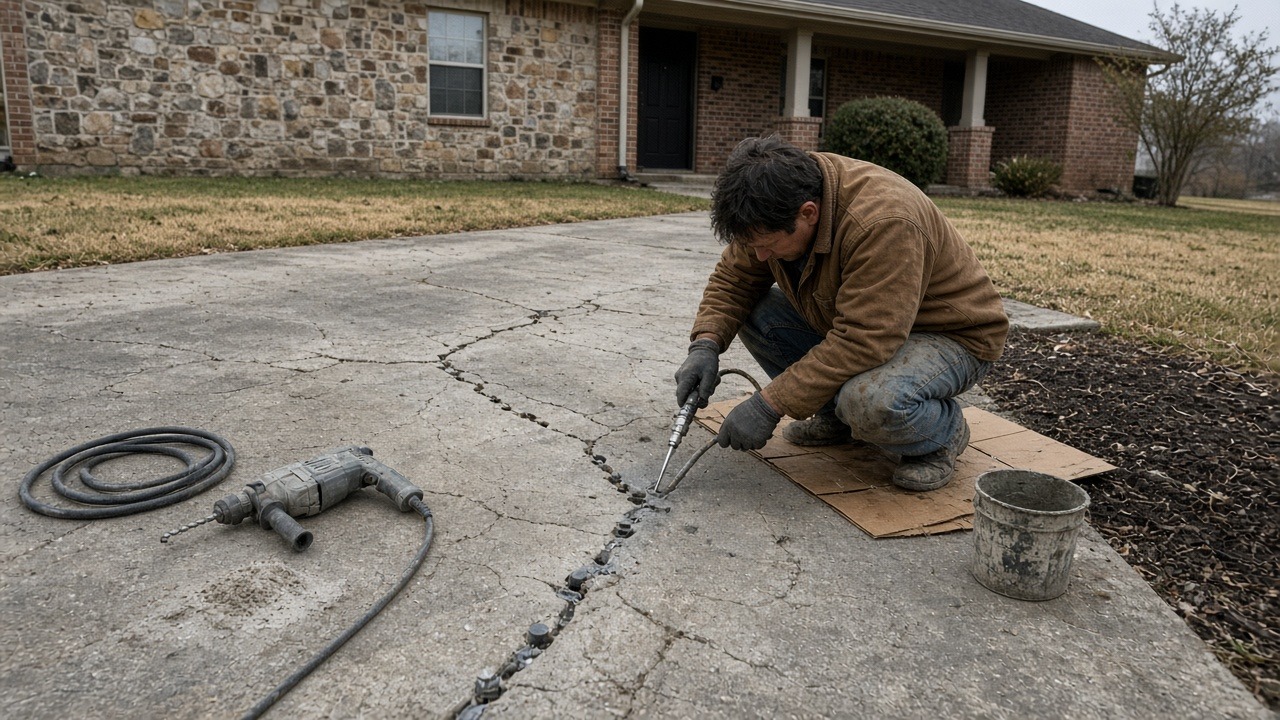
Slab Foundation Repair
Pressed concrete or steel piers under the perimeter beam to stabilize Joshua slabs where Crosstell clay meets sandy Gasil ground.
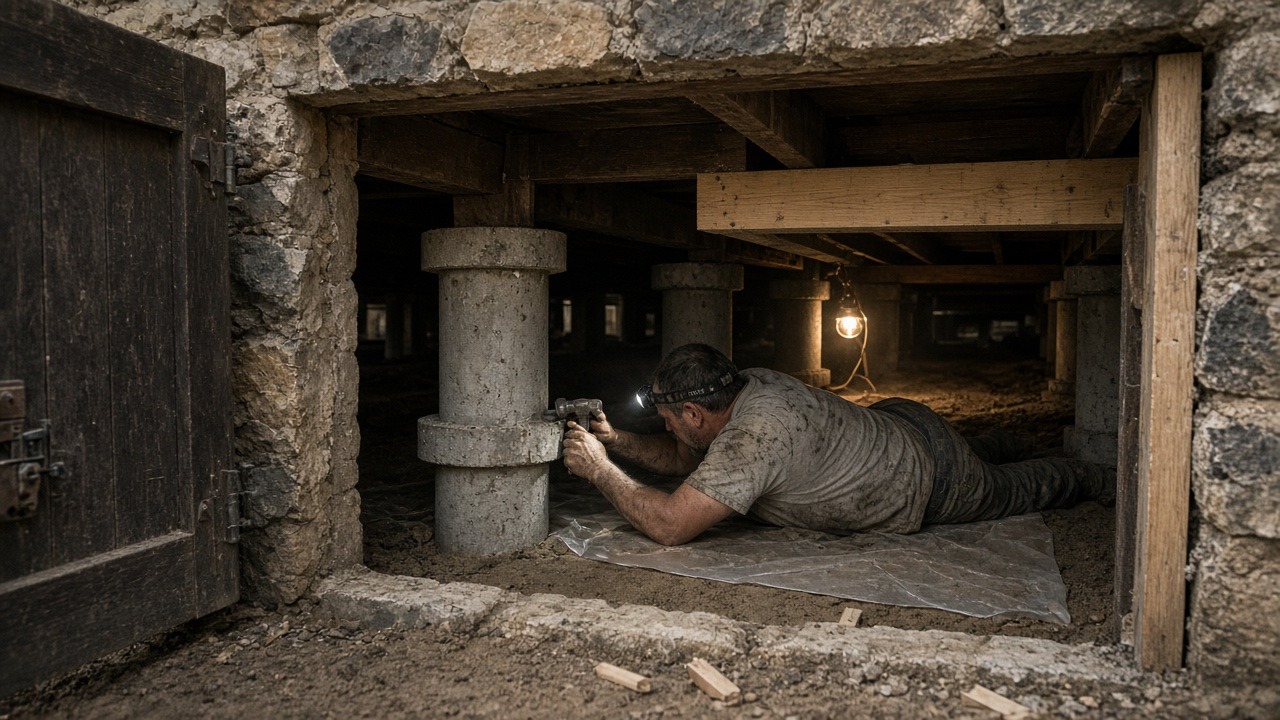
Pier & Beam Repair
Crawlspace shimming and re-leveling for the older and rural-edge raised-floor homes around Joshua.
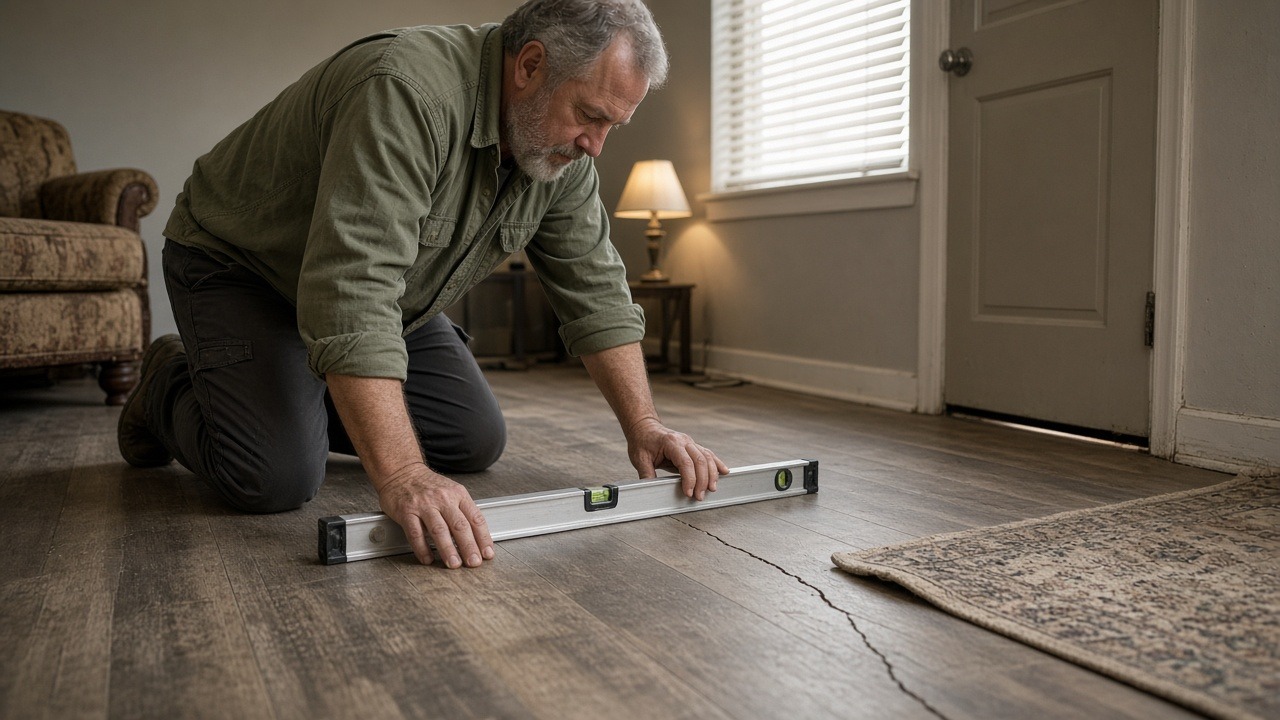
Foundation Leveling & Inspection
Elevation readings and crack mapping that show whether your Joshua home is moving on the clay side, the sandy side, or both.
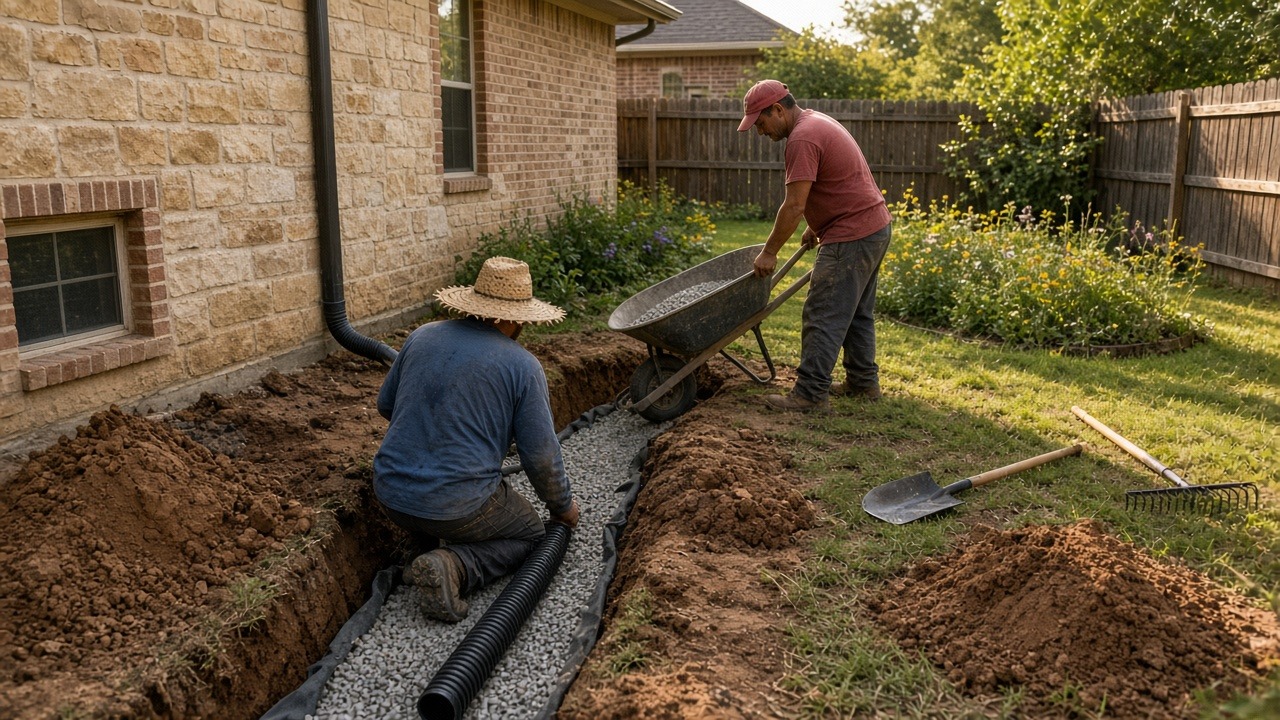
Drainage & French Drains
French drains and downspout extensions that keep the clay side of a Joshua lot from swinging wet and dry while the sandy side stays steady.
We also serve Crowley, TX, Burleson, TX, and South Fort Worth, TX.
Foundation Repair in Joshua, TX: Common Questions
When part of your slab sits on expansive Crosstell clay that swells and shrinks, and part sits on non-expansive Gasil sand, the house doesn't move as one piece. Stress concentrates where the two soils meet, so cracks and a single dropping corner are common.
One corner sinking in Joshua?
Hours: Call for availability
Two soils, one house. Let's find out which side is moving.
Hours: Call for availability