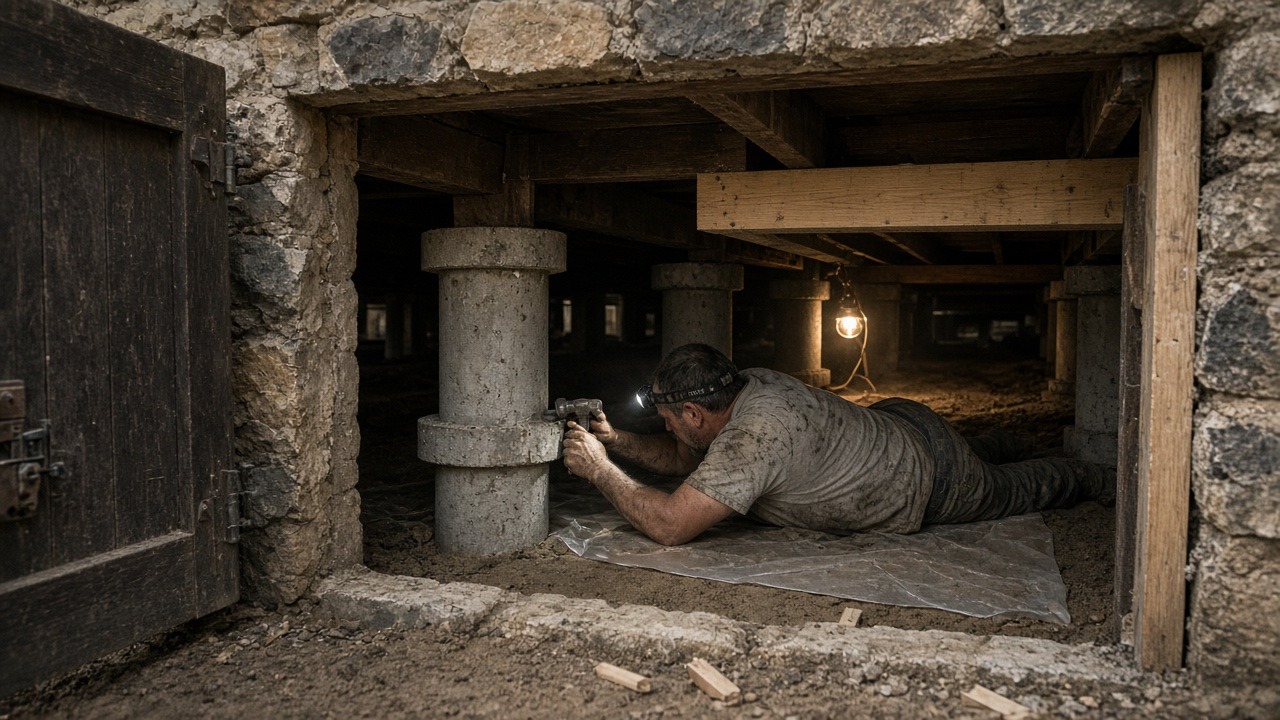
Subfloor crawlspace inspection of concrete block piers and timber beams.
Pier & Beam Repair in Crowley, TX
When the trouble is in the crawlspace, not the slab: stabilizing posts, beams, shims, and moisture controls.
8 Warning Signs Inside a Raised-Floor Crawlspace
Soft or spongy spots in the subfloor when walking
Gaps widening at the tops of interior door frames
A persistent musty or damp odor inside the house
Standing water or damp clay under the floor after rain
Cracked, shifted, or leaning concrete pad piers
Loose, displaced, or missing wood shims between pier and beam
Wood rot, fungal decay, or insect damage in sill plates
A torn, missing, or bunched polyethylene vapor barrier
Pier & Beam Repair in Crowley, TX happens under the floor, not under a slab: the work is adjusting, replacing or adding the piers, shims and beams that hold a raised floor up. Raised-floor homes are a minority here, mostly older homes near the historic downtown railroad corridor and rural-edge properties along FM 1187, but they experience unique moisture and leveling challenges on expansive Grand Prairie soils.
What Is Pier and Beam Foundation Repair?
Pier and beam repair involves crawling into the subfloor space to inspect the timber girders, joists, concrete blocks, and cedar or steel shims that support your flooring. Settled piers are leveled with hydraulic bottle jacks, compressed or rotten shims are swapped for durable steel, and damaged structural beams are sistered or replaced.
Because raised floor framing rests on individual concrete pads, any movement in the shallow soil directly tilts the posts above. When soil swells or contracts, a single pier can lift or settle by an inch, creating bouncy floorboards or doors that stick diagonally in their frames.
If you also suspect perimeter yard water is saturating the crawlspace clay, see our Drainage & French Drains guide.
Why Do Raised Floors Sag or Bounce?
Raised floors sag when support shims slip or compress under heavy furniture loads, when concrete base pads sink into soft crawlspace clay, or when persistent crawlspace humidity causes wood rot and structural deflection along joists and main support girders.
High humidity trapped beneath a home creates a breeding ground for wood-destroying fungi. In many older North Texas homes, perimeter vents were either covered with landscaping or lacked adequate cross-ventilation, causing summer ground water to vaporize and saturate the floor joists.
Homes in nearby Joshua, TX frequently encounter similar sandy-clay crawlspace conditions where timber framing settles unevenly.
How Much Does Pier & Beam Repair Cost in Crowley, TX?
Localized re-shimming under a sagging room or sticking hallway is roughly $800 to $3,500. A full crawlspace re-level across the entire floor plan runs roughly $4,000 to $12,000. Replacing rotten main beams or adding supplemental concrete piers adds cost. All figures are estimates.
Minor adjustments that only require lifting sagging beams with bottle jacks and inserting high-density steel shims are fast and economical. Larger jobs involving dry rot remediation, supplemental girder installation, or adding new interior pads fall in the middle to higher end of the range.
Wondering whether your raised home just needs shims or a full structural plan? Schedule a Foundation Leveling & Inspection first to get verified floor elevation readings.
Pier & Beam Repair: Common Questions
Yes; unlike concrete slabs which can only tolerate so much flexing, pier and beam foundations are designed with access to sub-floor wood framing and concrete blocks, allowing future re-shimming if seasonal clay movement causes minor settling years down the road.
Floors bouncy or sloping?
Hours: Call for availability
Soft spots underfoot? Let's look under the floor.
Hours: Call for availability